How Long Should You Hold a Plank and Do They Burn Fat?
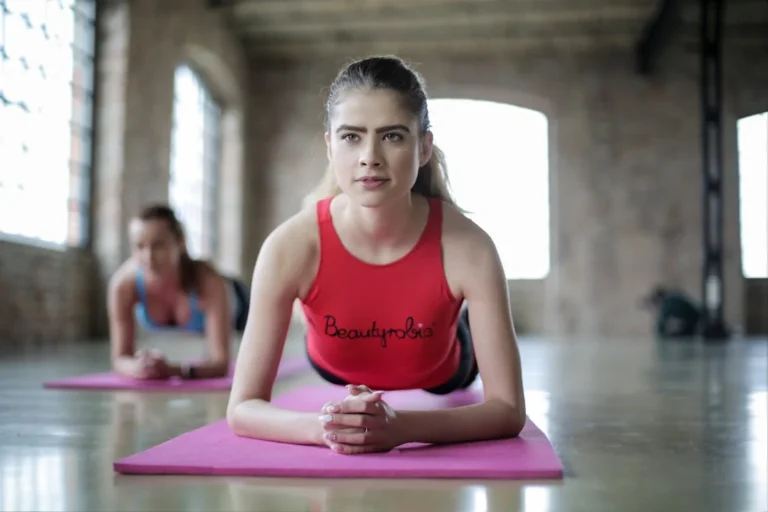
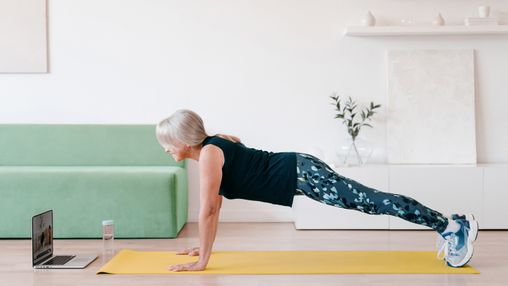
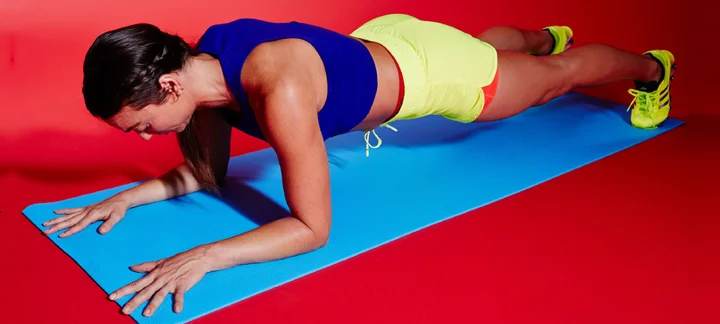
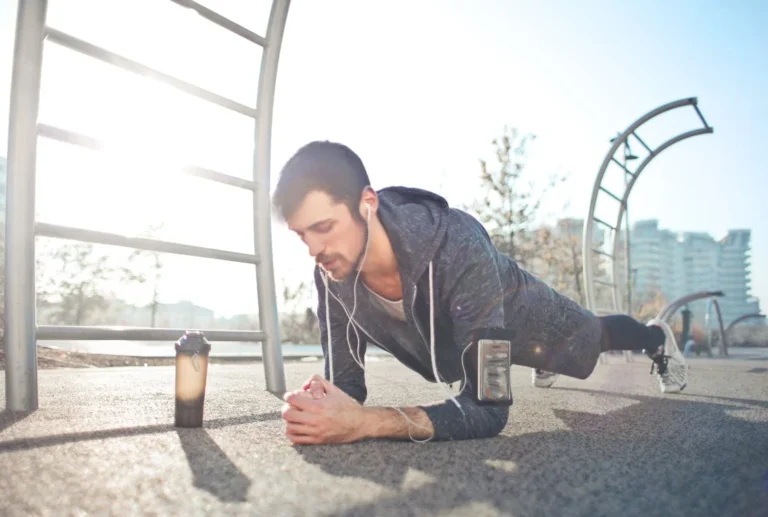
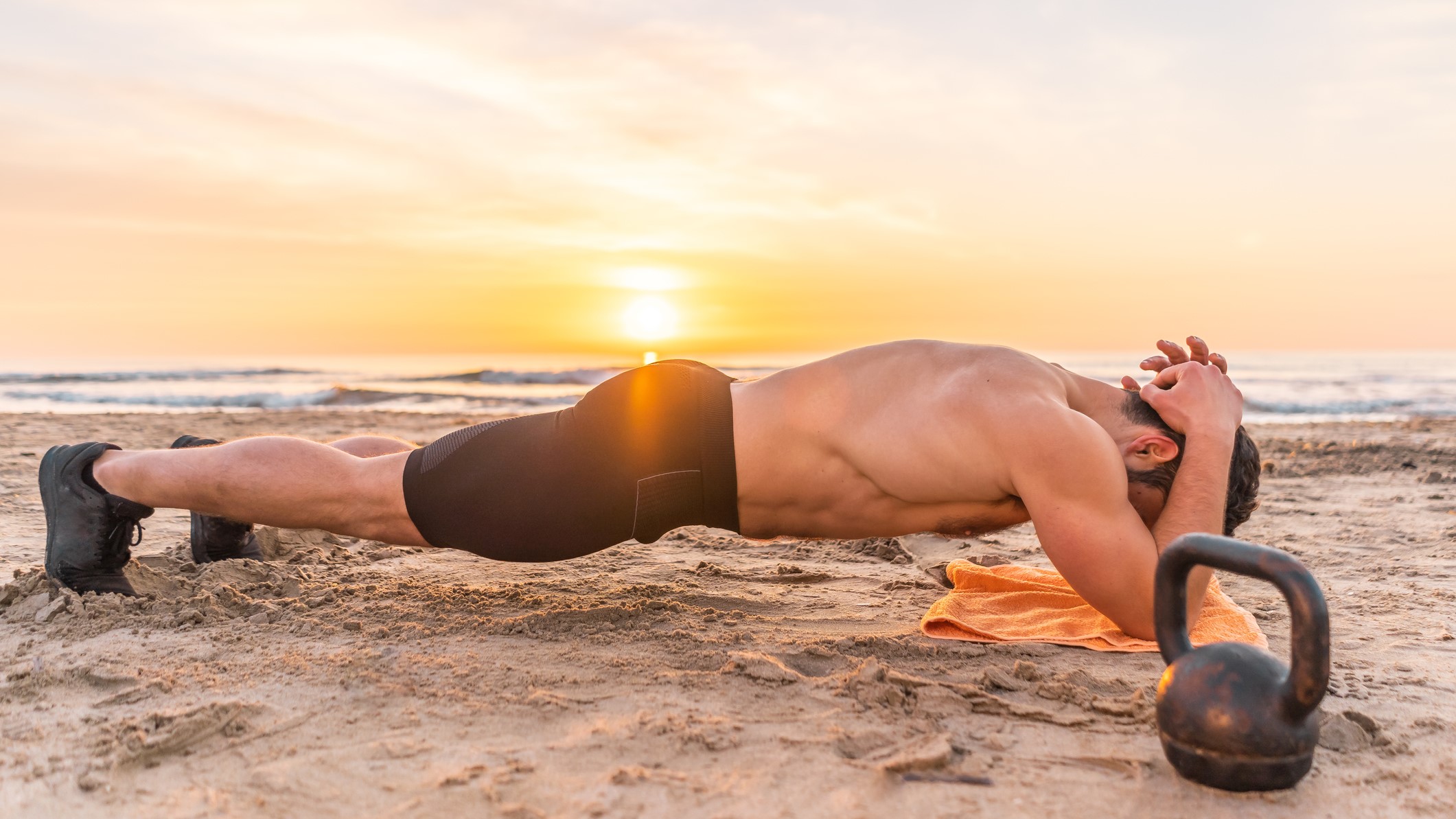
The plank works. In fact, according to a study conducted by researchers at Pennsylvania State University the plank works your core more effectively than traditional crunches and, better still, won’t wreck your back, either.
However, this is not an article that is attempting to debate the planks utility or usefulness, at this point that is beyond reproach, what we’re going to do here is work out firstly, whether the plank is a credible a fat-burning tool and secondly, just how long you should be holding. The answers to both of which you can find below.
Do Planks Burn Belly Fat?
So we’ll start with the big question, do planks burn belly fat? As PT and the founder of Lemon Studios, Sam Shaw, explains, planking will aid your weight-loss ambitions, but using them as a fat burner and nothing else is a bit like opening a bottle with your teeth, yes, you can do it, but there are definitely better tools for the job. ‘The bodyweight plank is a brilliant exercise for strengthening your abdomen, your oblique muscles, your quadratus lumborum, your lower back and your glutes,’ says Shaw. ‘It’s also a brilliant all-round low impact exercise for strengthening the core and helping reduce injury in day to day life.’
What to read next
Dave Bautista, 56, Has Gone Viral for His Physique — and Says He Got There by Training Smarter
‘In terms of burning belly fat, performing a static plank will use up some calories, but it won’t be instrumental in burning belly flat specifically as you can’t spot reduce where you lose weight from. Belly fat loss would come down to having the correct and optimised nutrition and ensuring that you are expending more energy than you are consuming.’
Can You Get in Shape with Planks Alone?
To answer this question you really need to know what you’re looking to achieve. If you want to build massive arms or tree trunk legs, then planks aren’t the way to go. If you want strengthen your core on the other hand…
‘Planks are an effective way to strengthen the core, trunk and lower back to minimise any injury and to help support other movement patterns in training such as deadlifts and squats, where a strong trunk is paramount,’ says Shaw.
So How Long Should You Hold a Plank?
According to professor and spine specialist Stuart McGill, PhD, the answer is just 10 seconds.
‘There’s no utility to this kind of activity other than claiming a record,’ said McGill, who was speaking to The Telegraph. Instead, McGill believes you will see greater benefits from planking for three 10-second intervals rather than long holds. ‘Basically, holding repeated holds of 10 seconds is best for the average person. But for people looking to better back health they should be doing the Big 3 (curl-ups, side-plank, and bird dog) every day. My conclusions come from many studies that we have performed, not just a single one.’
McGill, who spent 30 years as a professor of spine biomechanics, also warned that you should avoid certain back exercises first thing in the morning.
‘Your discs are hydrophilic, which means they love water, they suck up fluids, so when you go to bed at night you’re shorter than when you wake up in the morning. Your spinal discs are much more inflated, they don’t like to bend and actually it has three times the stress.’
McGill recommends not doing bending exercises in the morning, such as pulling your knees to your chest or sit-ups. He believes it would be much wiser to wait an hour, go for a walk and let gravity “squeeze out some of the water.”