Strong Core, Strong Form: The Right Way to Plank According to the Pros
“The plank is more than an exercise—it’s a fundamental building block in the fitness world, accessible to beginners and indispensable for advanced practitioners,” says Laura Logan, a NASM certified personal trainer and certified pilates teacher at Club Pilates in Utah. “Its unique position as a static exercise allows it to foster strength, stability, and endurance by engaging a wide array of muscles simultaneously.”
What Muscles Do Planks Work?
These really are a full-body move. Holding a plank requires multiple essential muscle groups to work hard and work together, strengthening and stabilizing far more than just your abs. “Executing a proper plank is like conducting a symphony of muscles, each playing its specific role in harmony,” Logan says. The key players? Logan breaks it down:
Core Muscles
- Rectus Abdominis: The outer layer of ab muscles (familiarly called the “six pack”) that are necessary for the crunching forward movement.
- Transversus Abdominis: This is your super-deep abdominal muscle closest to your spine. “It acts as your body’s natural corset and cinches your waist, stabilizing the lower back and pelvis,” Logan explains.
- Obliques (Internal and External): Aka, your “side-abs”—these help stabilize your trunk by holding your ribcage and hips in alignment.
- Erector Spinae: These run lengthwise down your spine, “ensuring its integrity and maintaining a neutral posture during the plank,” according to Logan.
Upper Body Muscles
- Chest, Neck, and Shoulder Blades: “The combined forces of the pectorals, serratus anterior, trapezius, and rhomboids secure the shoulder blades, while the neck extensors align the neck with the spine,” she says.
- Shoulders and Arms: And if you’re positioned correctly, your shoulders, biceps, and triceps should also contract and activate during a plank.
Lower Body Muscles
- Glutes and Legs: Though not primarily considered a glute or lower body exercise, planks absolutely involve the leg muscles, too. “Glutes and quadriceps prevent the hips from sagging, providing essential stability and alignment, while the hamstrings help with hip extension,” Logan explains.
Health Benefits of Planks
They directly target the core, including the abdominals and back.
Ultimately, planks are a key exercise to achieve a strong core (which involves way more than your superficial ab muscles), safe spine, and pain-free back. “A robust core is vital for everyday activities and peak athletic performance, fostering improved posture, reducing back pain, and enhancing balance,” Logan says.
They are an efficient and multifunctional exercise.
There’s no getting around how many body parts a good plank activates and benefits! “By engaging diverse muscle groups, planks challenge and strengthen the entire body,” Logan says. With a solid plank, you’ll be training your abdominals, shoulders, and triceps, as well as the glutes and quads.1
They help minimize pain and injury risk.
“By fortifying the core and adjacent muscles, planks play a significant role in minimizing injury risks through enhanced stability and proper movement patterns,” Logan explains. “Having a weak core may create too much load on ‘nearby’ muscles.” When these surrounding muscles are forced to compensate for weak core muscles, pain and injury can eventually follow.
They improve your posture.
You may just stand up a bit straighter if you stick to planking, says Lillian Davis, CPT and Studio Lead at Life Time Deerfield Township in Mason, Ohio. “By strengthening your core, back, and shoulders in a plank, you are able to hold a more neutral spine which allows your shoulders to stay back, showing better posture,” she says.
They improve endurance.
Planks will help increase your muscular endurance, Davis explains. “By engaging multiple muscles at a time, you’re working up your muscular stamina,” she says.
How to Do a Plank
“Strong abs keep your spine supported,” Coopersmith says. “Think of doing planks as midsection multitasking.” Doing a proper plank is a test of muscle control. Once you’re in a plank, you should try has hard as you can not to shift or wobble an inch (except to keep breathing!). Here’s how to do one perfectly.
Step 1: Position Upper Body
Press your palms firmly into the floor and press up from your foundation, widening your shoulder blades until they are as far apart as possible (this engages your upper back).
Think of the back of your neck lifting up toward the ceiling and your neck lengthened forward. Don’t let your shoulders scrunch or shrug up toward your ears.
Step 2: Position Lower Body
Doing a plank may target the abs, but your legs should feel a little burn too. If they don’t, push back through your heels and push the balls of your feet into the floor.
Engage your quadriceps (aka thighs) and squeeze your gluteals (butt muscles) together to activate the muscles in your lower body. Think of muscles in your butt wrapping strongly around the “sit bones.”
Step 3: Squeeze and Tuck Glutes In
Speaking of your gluteals, keep your booty nice and low during a plank—not lifted toward the sky. Your body should look like a straight line rather than a triangle.
Step 4: Engage Core
To engage and really work your deep core, imagine drawing your belly button in and up toward your spine and drawing your ribs tight and in. On every exhale, think of tightening your core even more deeply.
Don’t forget to breathe! Just because you’re challenging your muscles to sustain contraction doesn’t mean your lungs should stop moving. Remember to inhale and exhale rhythmically throughout the duration of your plank. If you’re not one to watch the clock—and you are one to forget to breathe—it might be helpful to time your plank by breaths in and out. If you’re just starting out, try holding a plank for five breaths in and five breaths out before releasing.
Step 5: Correct Your Alignment
Want to ensure proper plank alignment? Imagine a glass of water balancing on your lower back or a ball rolling from the nape of your neck to your heels without getting stuck in a sunken valley (meaning your collapsed lower back) along the way.
Only hold a plank for as long as you can do it correctly and stay in this position. If that’s 10 seconds—that’s fine! Work your way up to a minute or more little by little. There’s no point doing it if you’re not doing it safely.
Try This Basic Plank Routine
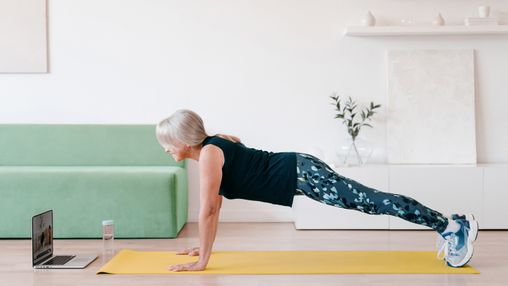
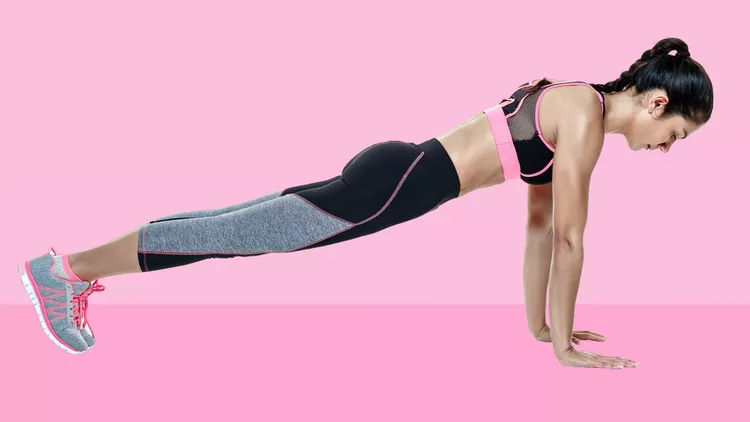
- Press your hands and knees to the floor with your back in a neutral position and your wrists aligned directly under your shoulders. Gaze about one foot in front of you. Your nose should point toward the floor and the back of your neck should be parallel to the ceiling.
- Extend your right leg back, with toes flexed, then bring your left leg to join it. The weight of your body should now be fully supported by your hands and toes.
- Tighten your entire midsection by activating your abs, as if you were bracing for a punch to the gut—or trying to draw your navel up toward the ceiling. Lift the pelvic floor (as if trying to stop the flow of urine) to engage your deepest ab muscles.
- Hold this position for 20 to 60 seconds, remembering to breathe.
- Rest. Bring your knees to the floor, then sit back on your heels, keeping your big toes touching and your knees apart. Lower your torso to let it rest on the tops of your thighs, with your forehead lightly touching the ground. Your arms should be stretched out in front of you, straight but comfortable (you may recognize this as the yoga position child’s pose).
- Repeat the above, doing a total of three planks. As you become stronger and doing a plank becomes easier, try holding it for longer than a minute.
3 Plank Variations
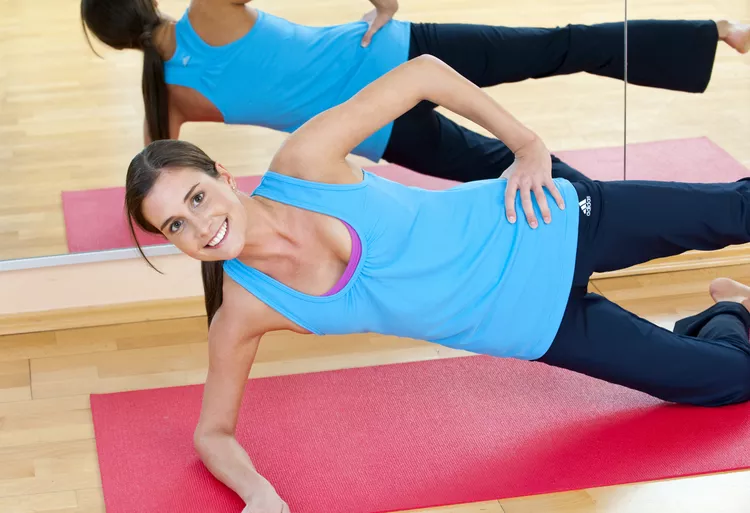
Now that you know the basic form for a standard plank, try out a few variations on the original. From a forearm plank to a single-leg plank, try these plank variations in your workout routine.
Forearm Plank
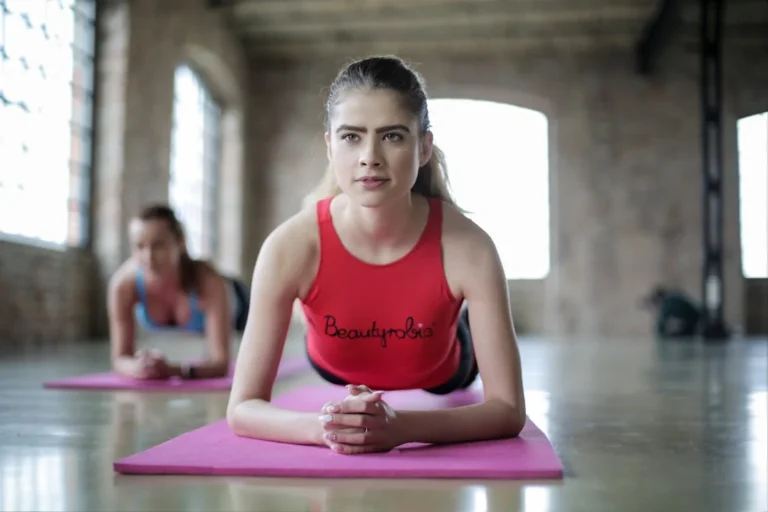
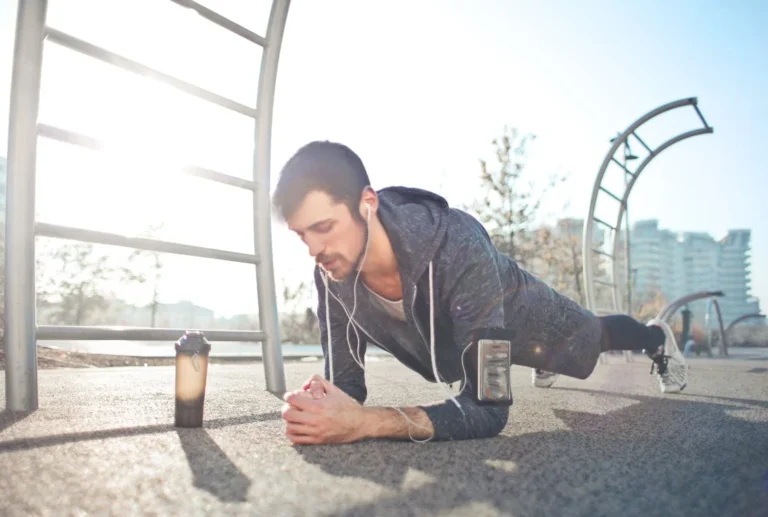
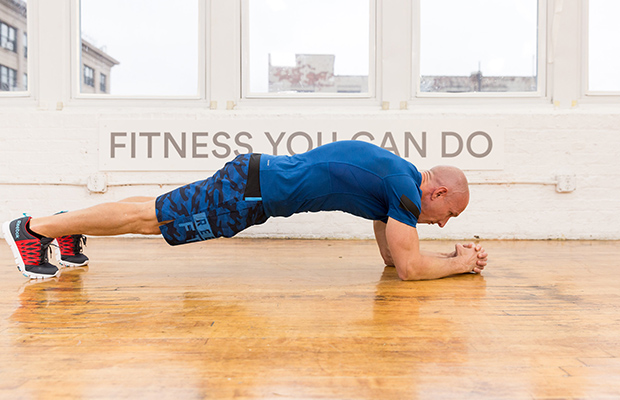
- Starting with your forearms pressed on the ground, lift your body up. Your hands should be palm down to the ground or clasped together.
- Align your elbows directly under your shoulders. Widen your shoulder blades to engage your back muscles.
- Engage your quadriceps and squeeze your gluteals. Push back on your heels to engage your leg muscles.
Forearm Knee Plank
- Begin by laying facedown on the floor. Then, lift yourself up, pressing your forearms into the ground and keeping your knees on the ground.
- Align your elbows directly underneath your shoulders, and tuck your booty in, so your body forms a straight line from your head to your knees. Continue to engage your core.
Single Leg Plank
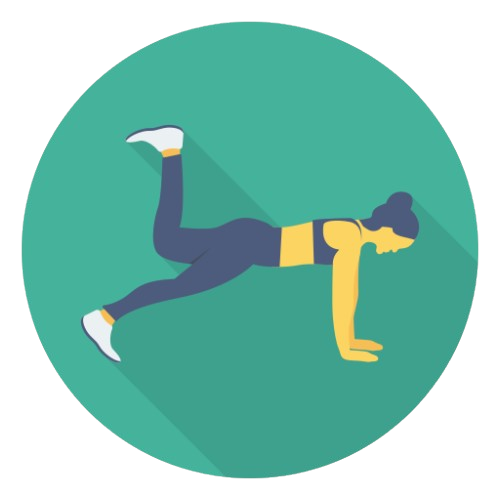
- Start by positioning yourself into a standard plank or forearm plank.
- Once you are there, lift one leg slightly, making sure to keep your abdominal and glutes engaged.
- Alternate your legs every so often, making sure to hold each position for 20 to 60 seconds or however long you’re able to while maintaining correct form.